


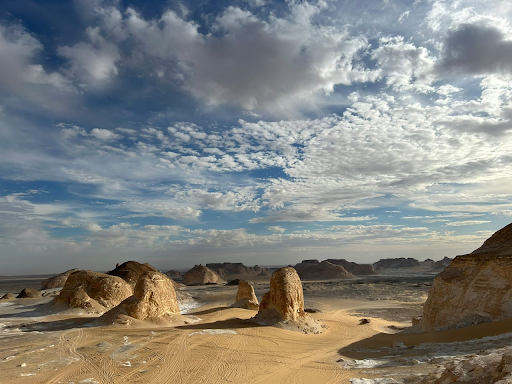
Standing at the edge of Egypt’s portion of the Sahara Desert, one confronts a landscape that defies human scale endless waves of golden dunes stretching to horizons where earth and sky blur into a single shimmering line. This is not merely a barren wasteland but a living testament to geological forces, ancient civilizations, and nature’s remarkable capacity for adaptation. Egypt Sahara encompasses roughly two-thirds of the nation’s territory, creating a dramatic counterpoint to the fertile Nile Valley that has sustained Egyptian civilization for millennia. Understanding this desert means understanding Egypt itself, its history, culture, biodiversity, and the delicate balance between human ambition and nature’s overwhelming power.
The Geographic Tapestry of Egypt’s Desert Realm
Egypt’s Western Desert constitutes an area of the Sahara west of the Nile, extending to the Libyan border and south from the Mediterranean Sea to Sudan. This vast expanse covers approximately 680,650 square kilometers, representing the majority of Egyptian territory yet supporting only a fraction of its population. The landscape reveals extraordinary diversity beyond the stereotypical sand dunes that dominate popular imagination.
The Western Desert contains the spectacular Great Sand Sea, a roughly lung-shaped formation of massive dunes straddling the Egypt-Libya border. These towering sand formations reach heights exceeding 100 meters, creating an undulating ocean of silica that shifts perpetually under wind’s patient sculpting. The hypnotic regularity of parallel dune ridges, visible from satellite imagery, masks the dynamic nature of these formations, each grain repositioned countless times over millennia by seasonal winds.
Beyond the sand seas lie rocky plateaus called hamadas, gravel plains known as regs, and dramatic escarpments revealing geological strata spanning hundreds of millions of years. The Qattara Depression, plunging 133 meters below sea level, represents the lowest point in Africa outside Ethiopia’s Danakil Depression. This vast sunken area, covering nearly 20,000 square kilometers, contains salt marshes and seasonal lakes that support unique ecosystems adapted to extreme conditions.
Meanwhile, Egypt’s Eastern Desert presents different characteristics. Extending from the Nile eastward to the Red Sea coast, this region features rugged volcanic mountains, particularly the Red Sea Hills, which rise dramatically from surrounding lowlands. These ancient formations contain valuable mineral deposits including gold, copper, and semi-precious stones that have been exploited since pharaonic times.
Oases: Emeralds in the Sand
The Western Desert’s arc of oases Siwa, Bahariya, Farafra, Dakhla, and Kharga represents one of Egypt’s most remarkable geographical features. These fertile depressions, created by underground aquifers reaching the surface, have supported human habitation for thousands of years. Each possesses a distinct character shaped by local geology, water chemistry, and historical development.
Siwa Oasis, lying near the Libyan border approximately 750 kilometers from Cairo, maintains cultural distinctiveness rooted in its Berber heritage. The remote location preserved traditional Amazigh language and customs well into the modern era. Ancient ruins, including the Temple of the Oracle where Alexander the Great sought divine confirmation of his destiny, remind visitors of Siwa’s historical significance as a sacred destination.
Bahariya Oasis, most accessible from Cairo at just 365 kilometers distant, attracts adventurers seeking entry points to the White Desert and Black Desert. The White Desert’s wind-sculpted chalk formations create surreal landscapes resembling abstract sculptures, mushrooms, chickens, and otherworldly shapes that glow brilliantly under a full moon. The Black Desert’s volcanic hills and dolerite deposits create stark contrast, their dark surfaces absorbing intense solar radiation.
Dakhla and Kharga oases boast extensive archaeological remains spanning pharaonic, Roman, and Islamic periods. Ancient tombs carved into escarpments, mud-brick settlements dating back centuries, and functioning traditional irrigation systems demonstrate continuous human adaptation to desert conditions across millennia.
Climate Extremes and Adaptation
Upper Egypt locations including Aswan and Luxor receive over 4,000 hours of bright sunshine annually, approaching the theoretical maximum possible. This exceptional solar exposure creates temperatures regularly exceeding 40°C during summer months, with ground surface temperatures sometimes reaching 70°C. Such conditions rank Egypt’s Sahara among Earth’s most intensely heated regions.
Rainfall averages less than 25 millimeters annually across most of the Western Desert, with some areas experiencing years without measurable precipitation. When rain does occur, it arrives in sudden violent storms that transform dry wadis into raging torrents within minutes of flash flooding that poses serious danger to unprepared travelers. The extreme aridity creates potential evaporation rates exceeding 6,000 millimeters annually, meaning any moisture quickly vanishes into the atmosphere.
Winter brings dramatic temperature fluctuations. While daytime temperatures remain comfortable at 15-25°C, nighttime readings can approach freezing. This diurnal variation, sometimes exceeding 30°C, results from the lack of atmospheric moisture and cloud cover factors that would otherwise moderate temperature swings. Desert camping requires preparation for both extremes within a single 24-hour cycle.
Biological Resilience in Harsh Conditions
Despite apparent barrenness, Egypt’s Sahara supports remarkable biodiversity. Species inhabiting this extreme environment demonstrate extraordinary adaptations for water conservation, temperature regulation, and nutrient acquisition. Understanding these adaptations reveals sophisticated survival strategies perfected over millions of years.
Desert-adapted gazelles, including the endangered Dorcas gazelle, obtain necessary moisture entirely from vegetation, never drinking free water. Their kidneys concentrate urine to extreme levels, minimizing water loss while eliminating metabolic waste. Similarly, fennec foxes nocturnal hunters with oversized ears for heat dissipation remain active through scorching summers by sheltering in burrows during daylight hours.
Reptilian diversity includes species found nowhere else. Sand vipers employ sidewinding locomotion to traverse loose sand efficiently while minimizing body contact with hot surfaces. Spiny-tailed lizards excavate complex burrow systems providing temperature-regulated microhabitats. Even seemingly lifeless sand dunes harbor specialized beetles, scorpions, and spiders adapted to extracting moisture from fog or metabolic processes.
Plant life demonstrates equally impressive adaptations. Acacia trees develop root systems extending 30 meters deep, tapping aquifers far below the surface. Drought-deciduous shrubs shed leaves during dry periods, reducing water loss through transpiration. Annual wildflowers remain dormant as seeds for years, germinating explosively when rare rains provide brief windows of opportunity for reproduction.
Ancient Civilizations and Desert Resources
Egypt’s pharaonic civilization depended heavily on Saharan resources despite centering along the Nile. Desert expeditions sought building materials, sandstone from Gebel el-Silsila, granite from Aswan, limestone from Tura transported via the Nile to construction sites. Gold mines in the Eastern Desert funded monumental architecture and filled royal treasuries. Semi-precious stones including turquoise, carnelian, and amethyst adorned jewelry and religious artifacts.
The desert served strategic purposes beyond resource extraction. Natural barriers provided defense against invasion, while oases controlled vital caravan routes linking Egypt with Libya, Sudan, and sub-Saharan Africa. Trade in ivory, incense, ebony, and exotic animals enriched Egyptian economy and culture. Military garrisons stationed at oases protected these commercial arteries and projected pharaonic power into remote regions.
Archaeological discoveries continue revealing the desert’s historical importance. The Cave of Swimmers in Gilf Kebir contains rock art depicting people swimming in waters that disappeared millennia ago, documenting the Sahara’s transformation from verdant savanna to arid desert. Neolithic settlements, Roman forts, and Byzantine monasteries demonstrate continuous human presence adapting to progressively drier conditions.
Modern Desert Adventures and Tourism
Contemporary travelers experience Egypt’s Sahara through various adventure tourism activities. Multi-day safaris venture into the Great Sand Sea, following ancient caravan routes to remote locations accessible only by four-wheel-drive vehicles. Participants camp under star-filled skies unpolluted by artificial light, experiencing celestial displays of unparalleled clarity the Milky Way visible as a brilliant river of light stretching horizon to horizon.
Sandboarding down towering dunes provides adrenaline-charged entertainment. Though lacking snow’s speed, desert sands offer their own thrills plus forgiving landings when attempts go awry. Sunrise and sunset photography sessions capture magical light painting dunes in shades ranging from pale gold to deep crimson, creating compositions that have defined desert imagery for generations.
Hot springs scattered throughout oases provide therapeutic bathing opportunities. Mineral-rich waters emerging from deep aquifers maintain constant temperatures year-round, creating pleasant soaking conditions even during winter months. Local traditions attribute healing properties to these springs, attracting visitors seeking relief from various ailments.
Camel trekking offers traditional desert transportation methods, though contemporary versions typically involve shorter distances than ancient caravan journeys. Multi-hour rides allow appreciation of these remarkable animals’ desert adaptations while experiencing landscape at a pace revealing details invisible from vehicles.
Environmental Challenges and Conservation
Egypt’s Sahara faces mounting environmental pressures from climate change, groundwater depletion, and expanding human activities. Ancient aquifer systems that sustained oases for millennia show declining water tables as agricultural expansion and population growth increase extraction rates. Unsustainable pumping threatens long-term viability of these fragile ecosystems.
Desertification advances along the Egypt Sahara southern margins, driven by changing precipitation patterns, overgrazing, and vegetation removal. Sand dune encroachment threatens agricultural lands and infrastructure, requiring expensive barriers and stabilization efforts. Understanding these processes becomes crucial for developing effective management strategies.
Tourism growth, while economically beneficial, creates environmental impacts requiring careful management. Vehicle traffic damages fragile desert surfaces where tire tracks remain visible for decades. Waste disposal, water consumption, and habitat disturbance all need regulation to ensure sustainable tourism development. Progressive operators embrace leave-no-trace principles, minimizing their ecological footprint while providing authentic experiences.
Archaeological site protection represents another concern. Vandalism, looting, and uncontrolled visitation threaten irreplaceable cultural heritage. Balancing public access with preservation demands sophisticated management approaches, including site monitoring, visitor education, and enforcement of protective regulations.
Conclusion: Key Takeaways
Egypt’s Sahara represents far more than vast empty spaces it embodies geological grandeur, biological resilience, cultural heritage, and contemporary challenges that define this extraordinary landscape:
Geographic Diversity: Beyond iconic sand dunes, Egypt’s Sahara encompasses rocky plateaus, gravel plains, volcanic mountains, and below-sea-level depressions, creating landscapes of remarkable variety across two-thirds of the nation’s territory.
Vital Oases Chain: The arc of Western Desert oases Siwa, Bahariya, Farafra, Dakhla, and Kharga sustained human civilization for millennia through underground aquifers, serving as commercial hubs, sacred destinations, and cultural crossroads.
Extreme Climate Conditions: With annual sunshine exceeding 4,000 hours, temperatures surpassing 40°C, and rainfall averaging under 25 millimeters, Egypt’s Sahara ranks among Earth’s most intensely heated and arid regions, demanding specialized adaptations for survival.
Remarkable Biodiversity: Despite harsh conditions, specialized species including desert gazelles, fennec foxes, sand vipers, and drought-adapted plants demonstrate sophisticated strategies for thriving in extreme environments through water conservation and temperature regulation.
Historical Significance: Ancient Egypt depended on Saharan resources including building stones, precious metals, and trade routes, while archaeological sites document human presence adapting to progressive desertification over thousands of years.
Adventure Tourism Opportunities: Modern travelers explore through multi-day safaris, sandboarding, camel trekking, hot spring bathing, and astrophotography under exceptional dark skies, creating memorable wilderness experiences.
Conservation Challenges: Groundwater depletion, desertification, tourism impacts, and archaeological site protection require sustainable management approaches balancing human needs with long-term environmental and cultural preservation.
Strategic Importance: The desert served defensive purposes while controlling vital trade routes, projecting power into remote regions and linking Egypt with neighboring territories across North and sub-Saharan Africa.
Egypt’s Sahara continues shaping national identity, economy, and environment just as profoundly as the famous Nile Valley. Understanding this vast desert realm reveals essential truths about human resilience, nature’s extremes, and the delicate balance sustaining life where survival itself becomes an achievement worthy of wonder.
