


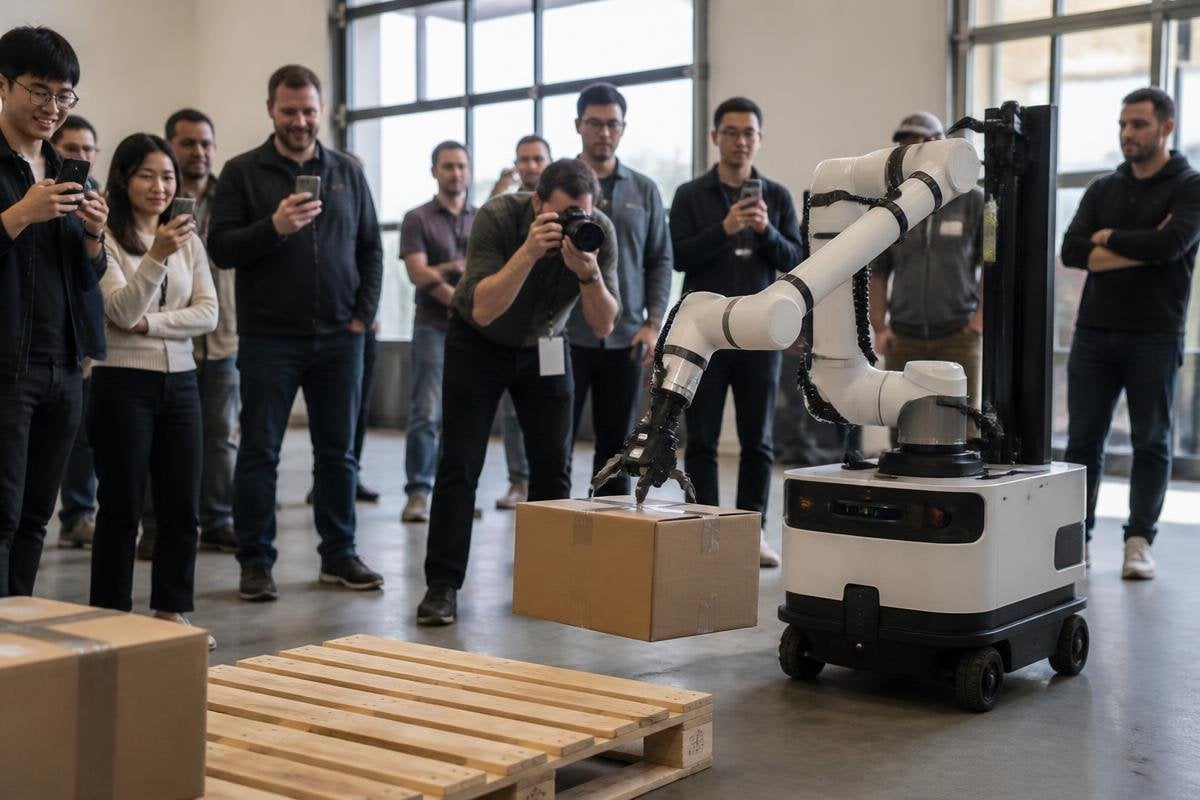
A robot can draw attention before it has a paying customer, a published price, or a clear path to regular work. That gap matters to anyone judging a robotics startup, because a good demo proves that a task happened once, not that the business works every day.
- Visible machines make progress easy to show
- Hardware needs more proof than a video
- Buyers should check the work, cost, and limits
A robot makes progress visible
Software can stay hidden inside a screen. A robot lifts a box, walks across a room, or sorts an object in front of a camera. That physical result gives a startup something people can see and discuss, even when the product is still under development.
The video also compresses a hard engineering problem into a few seconds. A startup may spend months tuning motors, sensors, control software, and safety systems, while the public sees one successful movement. The movement is real. The business case still needs separate proof.
That distinction explains much of the attention around robotics startups. A machine turns technical work into a visible event, while the missing details stay outside the frame.
The cost of building is easy to miss
Robots combine parts that must work together in the same physical space. A motor can meet its torque target and still heat up during a long shift. A gripper can pick one item and fail when the item is wet, soft, reflective, or placed at an odd angle.
Each extra condition adds work. The startup may need better sensors, stronger parts, new software, or a person who watches the system and takes control when it gets stuck. Those needs affect the price and the number of tasks one robot can handle.
For a buyer, the useful question is not whether the robot can perform a task. Ask how often it succeeds, how long setup takes, and what happens after a failure.
A machine that needs a person nearby may still help, but its labour cost belongs in the calculation.
Attention is not the same as demand
News coverage can grow after a funding announcement, a public demo, or a partnership. That coverage tells you that people are watching. It doesn’t show how many customers paid, how long those customers used the robot, or whether the machine reduced their costs.
A funding round can make a startup look further along than its robot is. Robot 24 reporting can put the announcement beside the machine’s test record and business figures, so you can judge whether attention reflects working sales or investor interest.
The missing evidence often sits in plain numbers: installed units, paid sites, task success rate, operating hours, service visits, and total cost. If a startup shares only a video and a broad claim, the main question remains open.
I’d treat attention as a reason to ask for proof, not as proof by itself.
What a serious buyer should check
A startup becomes easier to judge when its claims connect to the work you need done. Use this checklist before you spend time on a pilot:
- Name the task: Write down the exact object, movement, speed, and work area the robot must handle.
- Ask for test conditions: Check the lighting, floor, object range, shift length, and number of failed attempts.
- Price the full system: Include installation, software fees, staff time, repairs, spare parts, and training.
- Check human involvement: Find out who watches the robot, who clears faults, and how often control leaves the system.
- Request customer evidence: Ask for paid deployments, operating hours, measured output, and the date of the latest result.
This process also helps you compare a robot with a simpler option. A conveyor, fixture, or software change may solve one task with fewer service needs. A robotics startup has to show why its machine earns its place beside those choices.
What would prove the business
The strongest evidence is repeated work under normal conditions. Look for a named customer, a defined task, a measured result, and enough operating time to show how the system handles faults and maintenance.
The company doesn’t need a perfect robot to earn a sale. It does need to state what the robot can do, what it costs, and what still depends on people. Until those numbers are public and repeatable, attention remains an early signal rather than a buying reason.
